Animal School: A Wild Typography Choice
As a designer with years of experience in branding, editorial design, and digital product creation, I’ve come across countless fonts that promise to elevate a project. Animal School is one of those rare finds that not only delivers on its visual promise but also offers a unique personality that can enhance a wide range of creative work. But like any typeface, it’s not a one-size-fits-all solution. Here’s my honest evaluation of Animal School as a real-world design tool.
The First Impression: Playful, Expressive, and Full of Character
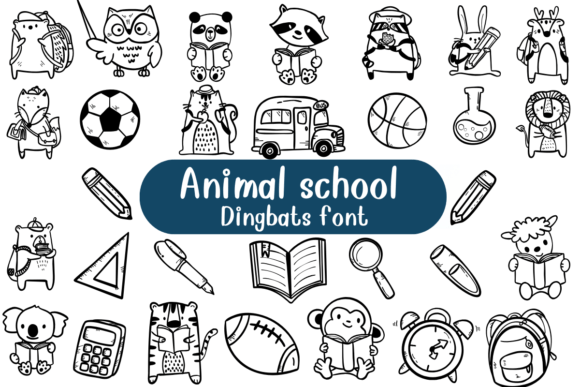
From the moment you see Animal School, it feels like a font that wants to tell a story. It has a hand-drawn, whimsical aesthetic that evokes childhood memories, playful illustrations, and a sense of lightheartedness. The letterforms are slightly irregular, with subtle variations that give the typeface a human touch. This makes it feel more approachable than many rigid display fonts, which is both a strength and a potential limitation depending on the context.
The mood it creates is unmistakably fun and energetic. It’s perfect for projects that aim to engage younger audiences or convey a sense of creativity and imagination. However, this same playfulness may not align with more serious or professional brand identities.
Real-World Performance: Where Animal School Shines
In logo design, Animal School works best when used sparingly. Its expressive nature makes it ideal for mascots, character-based logos, or branding that leans into a narrative or storytelling angle. When paired with a clean, modern typography, it can create a striking contrast that draws attention without overwhelming the viewer.
For packaging design, Animal School adds a distinctive flair that can make products stand out on shelves. It’s particularly effective on children’s products, novelty items, or anything with a playful theme. However, it’s important to test it at various sizes to ensure it remains legible and doesn’t lose its impact when scaled down.
In editorial design, Animal School can be a great choice for headings, subheadings, or section dividers in magazines, newsletters, or blogs that target a younger or creative audience. Its dynamic look helps break up dense text and add visual interest without sacrificing readability.
When it comes to social media graphics, Animal School can add a bold, eye-catching element to posts, banners, and promotional materials. It’s especially useful for campaigns that aim to be engaging, interactive, or shareable. Just be mindful of how it looks on different platforms and screen sizes.
Where to Use It Carefully: Limitations and Considerations
While Animal School is a creative font, it’s not always the best choice for large headlines or long blocks of text. Its irregularity can make it less readable in extended reading scenarios, such as body copy in books, articles, or web content. For these cases, a more structured typeface would be more appropriate.
It also requires careful pairing with other fonts. When used alongside serif or sans serif fonts, it can either complement or clash, depending on the balance. A script font might work well for accents, but a handwritten font could compete too much for attention. Always test it against different styles to find the right harmony.
For premium packaging or high-end marketing materials, Animal School may not convey the level of sophistication required. In such cases, a more refined display font or a minimalist sans serif might be a better fit.
Readability, Hierarchy, and Brand Consistency
One of the most important factors in choosing a font is how it affects readability. Animal School performs well in short phrases and decorative elements, but it’s not ideal for small sizes or low-contrast environments. When used in print or digital formats, ensure it’s given enough space and contrast to remain legible.
When building a brand identity, consistency is key. Animal School can be a strong component of a brand’s visual language if used intentionally. However, overuse or improper application can dilute its impact and confuse the audience. It’s best to reserve it for specific elements rather than making it the primary typeface.
Trust and professionalism are also influenced by typography. While Animal School can add a unique personality to a brand, it should be balanced with more traditional fonts to maintain a sense of credibility. This is especially important for businesses targeting a broad or professional audience.
Practical Designer Notes: Testing and Pairing
Before finalizing Animal School for a project, I recommend testing it in black and white to see how it holds up without color. Sometimes, the details that make a font interesting in color can become distracting in monochrome.
Check its performance at small sizes—especially if it will be used in product labels, packaging, or website footers. If it becomes too difficult to read, consider alternatives or adjust the design accordingly.
Try it on real mockups to see how it interacts with other design elements. Does it complement the overall aesthetic? Does it stand out in a way that enhances the message?
Compare uppercase and lowercase versions to understand how they affect the overall look. Some fonts perform better in all caps, while others look more natural in mixed case.
Review spacing and kerning to ensure it doesn’t feel cramped or uneven. A poorly spaced font can ruin even the most creative design.
Finally, confirm the commercial licensing before using it in client projects or business assets. Not all fonts are suitable for commercial use, and it’s essential to verify this before proceeding.
Conclusion: A Creative Tool with Purpose
Animal School is a premium font that brings a fresh, expressive energy to design work. It excels in areas where personality and visual interest matter most, such as logo design, packaging, and social media graphics. However, it’s not a universal solution and requires thoughtful application to avoid overuse or misalignment with the brand’s goals.
If you’re looking for a creative font that can add a unique touch to your projects, Animal School is worth considering. Just remember to use it wisely, pair it carefully, and test it thoroughly before finalizing your design.